
Dreamcatchers
Weaved Art Carefully Capturing The Spirit of First Nation’s Craftsmanship in Contemporary Design.

My work with dreamcatchers has been a unique dive into my Indigenous cultural background. As a mixed race, urban-raised woman, approaching my ancestry has been done with curiosity, regard and joy; while practicing it traditionally or creatively has been an exercise of self-advocacy at times.
Some of my earliest memories of elder-led teachings for me were through dreamcatcher weaving, drum making and teepee building, but it was the dreamcatchers that called to my creativity the most.
Since 2018 I’ve been weaving contemporary styled dreamcatchers to offer something beyond the traditional to the public.

Indigenous Made. Contemporary design


Unique Design


A Bold Reimagining of a Timeless Tradition
Professional Craftsmanship
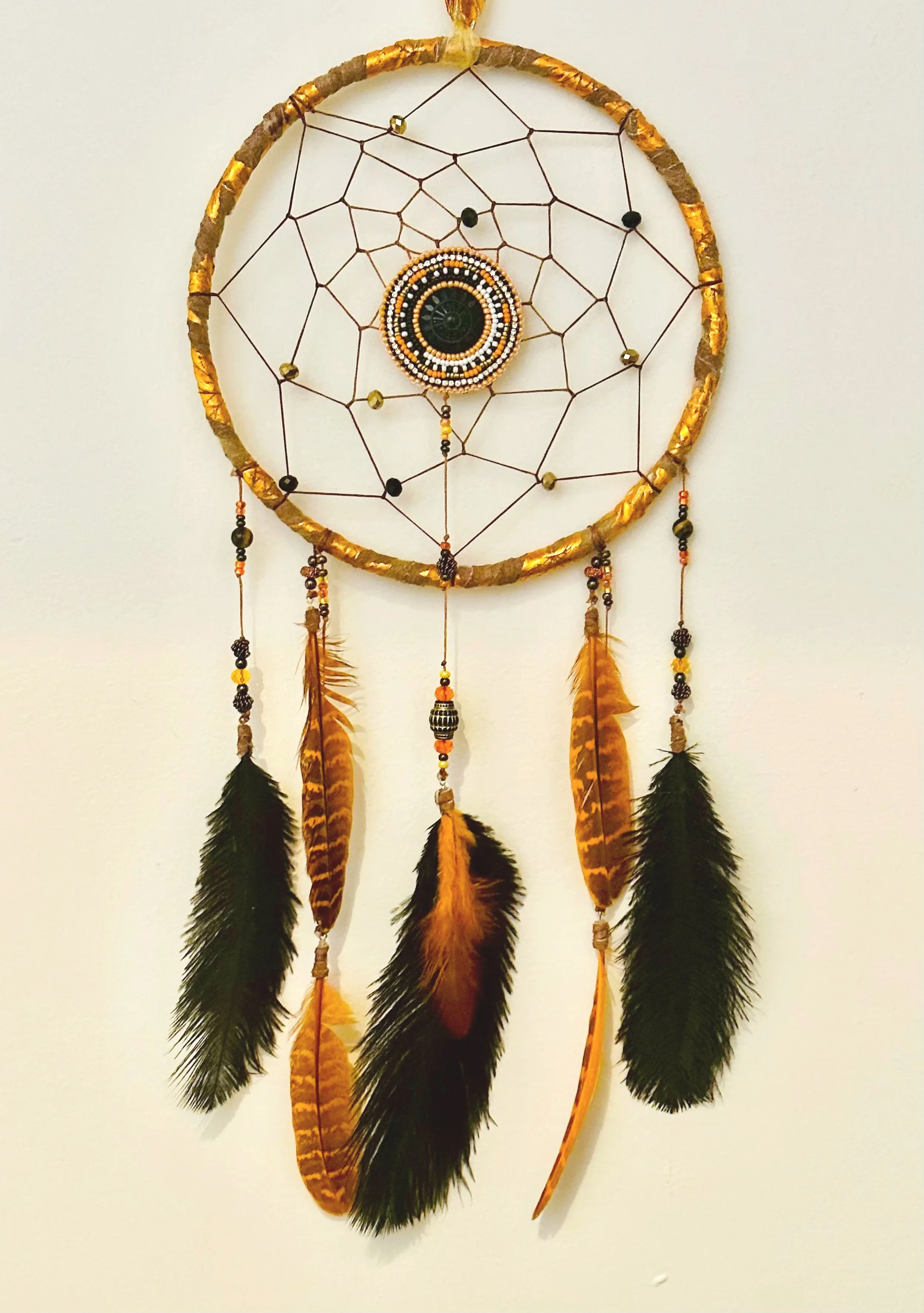
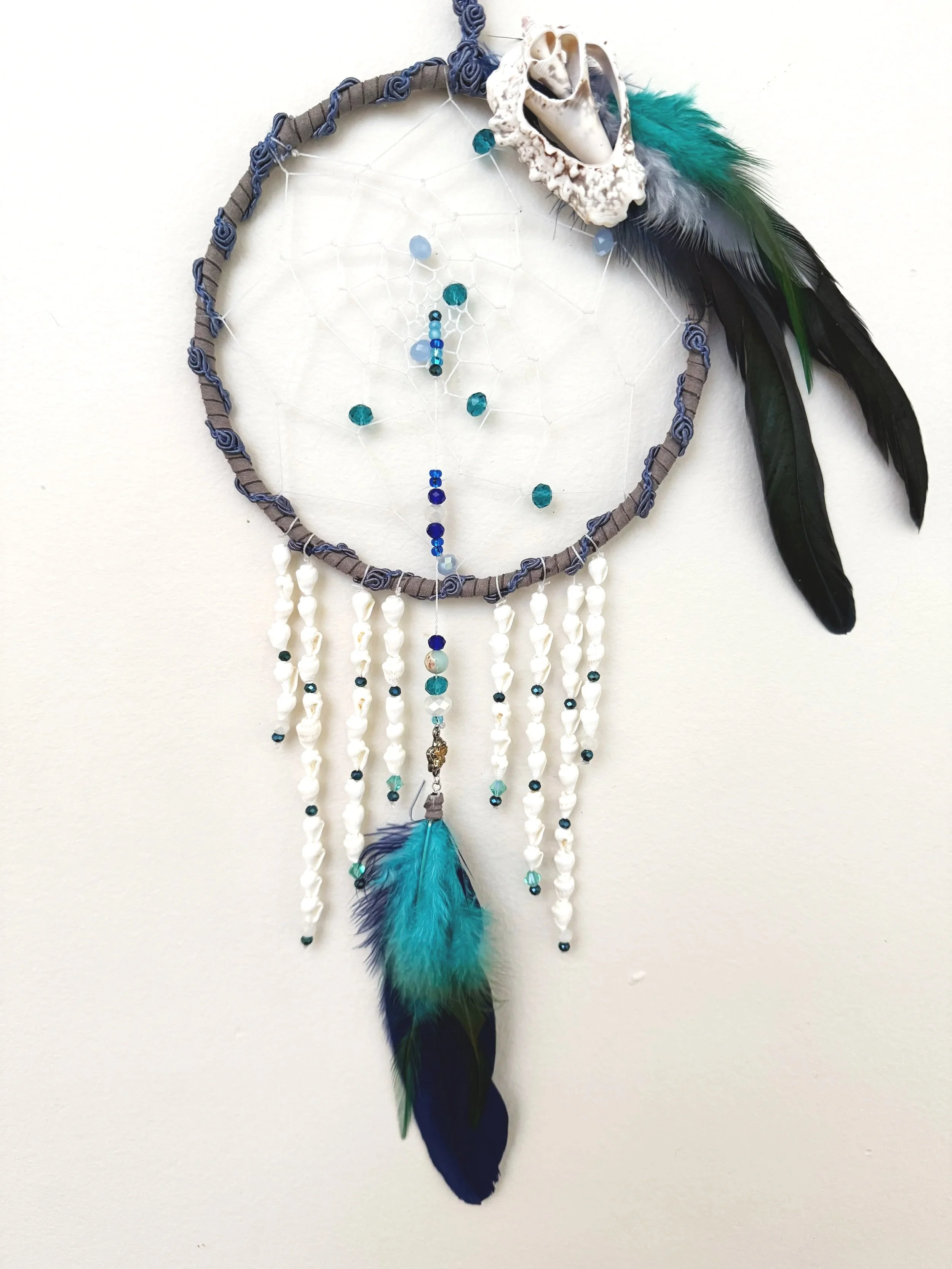
Beadwork
Nature-core Inspired

Complicated Design Work
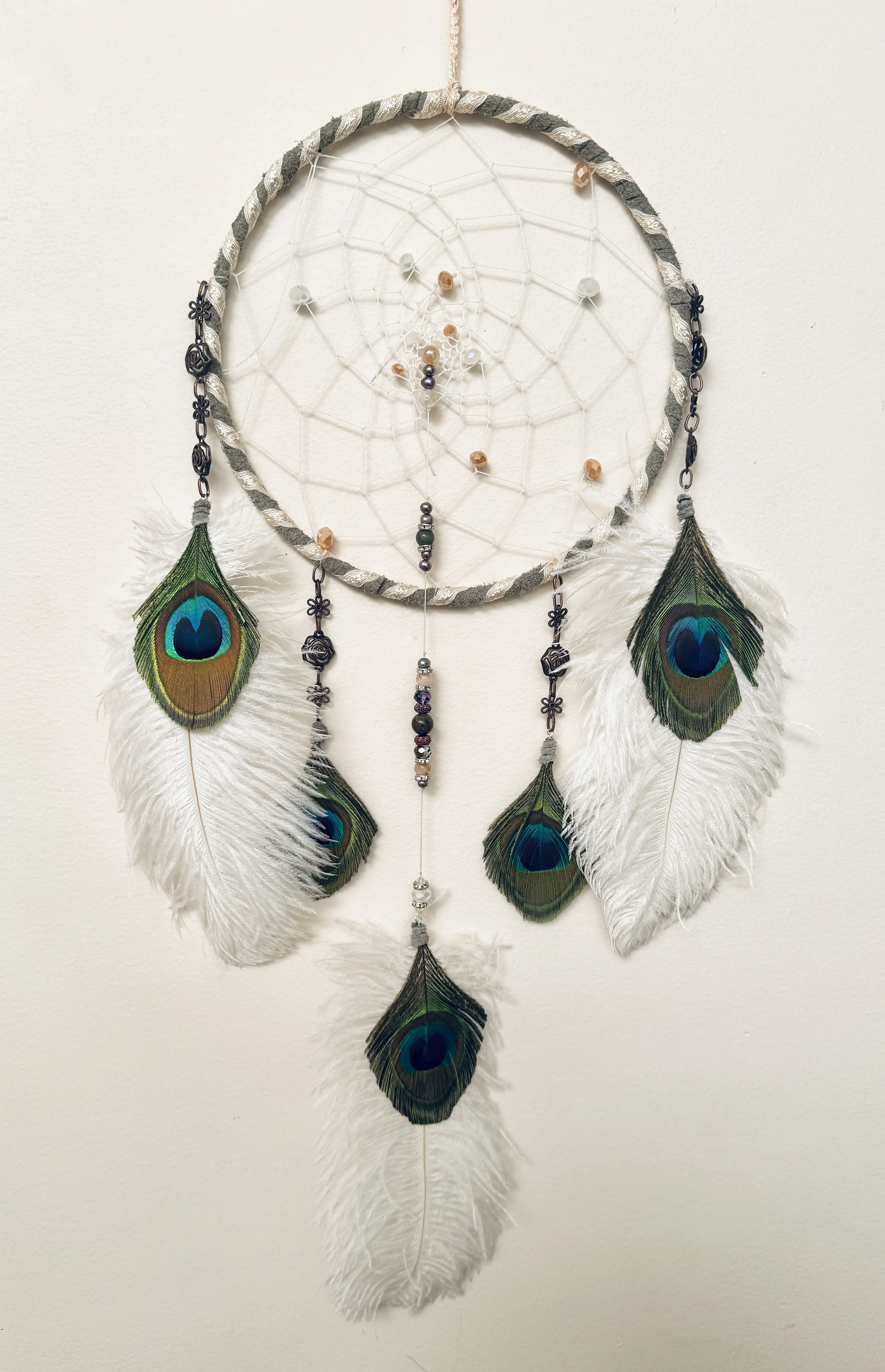
Diverse Range of Bird Feathers Used: Dyed and Natural
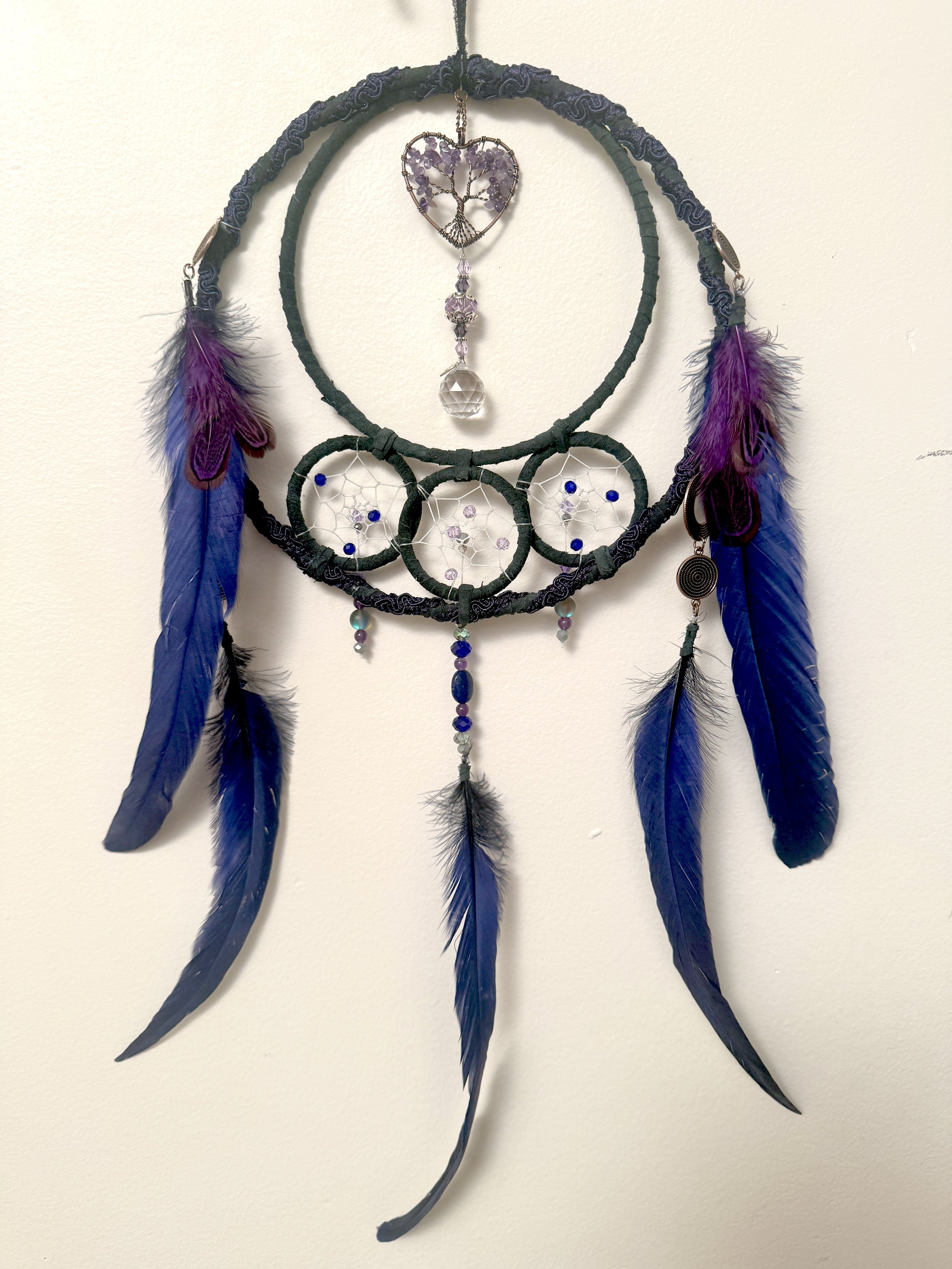
Incorporated Crystal Work
Dreamcatchers are traditional items created originally by the Anishinaabe (Ojibwe) Indigenous people of Turtle Island (North America). Classically, they were hoops made from willow and the centers were woven into webs with feathers or beads that were sometimes included. They were then suspended on cradles as a form of protection.
While the tradition began with the Anishinaabe, the trading and practice of dreamcatcher weaving became widespread amongst Indigenous nations mid-last century.
Dreamcatchers are indicative of Indigenous identity. While it is fine for non-Indigenous people to own or make their own dreamcatchers for personal use, it is considered offensive appropriation for non-natives to profit off of them by selling them publicly. If you are a non-Indigenous person looking to purchase a dreamcatcher, please buy from an Indigenous person.

Asibikaashi was the custodian of all Ojibwe infants and adults. As the Ojibwe started to geographically migrate across all of [Turtle Island], the task became too large for Asibikaashi to fulfill on her own. Thus, women were placed in charge of weaving the webs alongside placing charms meant to protect the infant. The charms would capture any harm surrounding the infant at any time.
Source: Paul Gowder, Powwows.com